


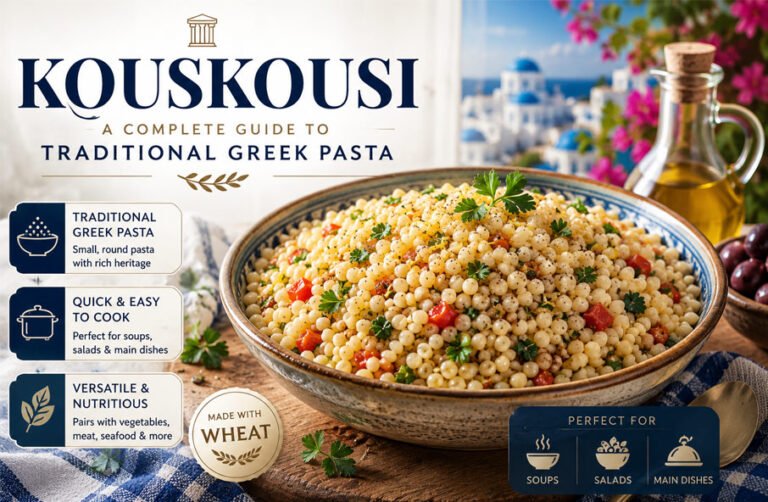
Kouskousi is a small traditional pasta found in Greek cooking, especially in Thrace. Its name often causes confusion because it looks and sounds similar to couscous, the well-known North African food.
People usually search for Kouskousi to understand what it is, how it is made, and whether it is the same as couscous. This guide explains its origins, ingredients, traditional preparation, cooking methods, uses, nutrition, and important dietary details.
What Is Kouskousi?
Kouskousi is generally described in Greek food traditions as a small, rounded pasta. Some versions are made mainly from durum wheat semolina and water, while traditional recipes may also contain flour, eggs, milk, or other ingredients.
Its small size makes it useful in many dishes. It can be cooked in water, added directly to broth, mixed into soups, or served with vegetables, meat, seafood, and sauces.
Kouskousi may look similar to couscous, but appearance alone does not make them the same food. Greek Kouskousi is usually treated as pasta and commonly boiled, while traditional North African couscous is prepared differently.
Recipes also vary between regions and producers. For this reason, the ingredient list and cooking instructions on the package are important when buying a commercial product.
Where Does Kouskousi Come From?
Kouskousi has a strong connection with Thrace in northeastern Greece. Traditional small pasta products have long been part of local cooking in areas such as Evros and Soufli.
Historically, homemade pasta was useful because families could prepare it when ingredients were available and then dry it for later use. Traditional pasta making was often linked with seasonal household work and food preservation.
The pasta could be prepared in larger amounts, dried thoroughly, and stored until needed. This made it practical for soups, family meals, and other everyday dishes.
There is no reliable evidence for one exact date when Kouskousi was invented. There is also no confirmed single inventor. It is better understood as part of a wider regional tradition of handmade Greek pasta.
Why Kouskousi Is Often Confused With Couscous
The confusion mainly comes from the name and appearance.
The words Kouskousi and couscous sound similar, and both foods can appear as very small wheat-based pieces. Some online sources therefore describe Kouskousi simply as another spelling of couscous.
However, Greek culinary use shows that Kouskousi can refer to a different product: a small pasta that is normally boiled rather than steamed. One of the collected sources also notes that the Greek pasta and North African couscous can differ in preparation, texture, and culinary tradition.
This means the word should be understood in context. If a package says Kouskousi, the safest approach is to check the ingredients and cooking directions instead of assuming that it should be prepared like instant couscous.
Kouskousi vs Couscous
Kouskousi and couscous can look similar, but their traditional preparation is different.
Greek-style Kouskousi is normally treated as pasta. It is commonly placed in boiling water or broth and cooked until tender. It may contain semolina, wheat flour, eggs, milk, or other ingredients depending on the recipe.
Traditional North African couscous is made by moistening semolina and forming it into tiny granules. These granules are traditionally steamed rather than boiled. The food is strongly connected with North African cooking, particularly Morocco, Algeria, Tunisia, and nearby regions.
Traditional couscous may be steamed more than once. The granules are separated between steaming stages so they remain light rather than forming large clumps.
The main differences are simple:
| Kouskousi | Couscous |
|---|---|
| Greek regional pasta | North African semolina food |
| Usually boiled | Traditionally steamed |
| Can contain different wheat ingredients, eggs, or milk | Traditionally based mainly on semolina |
| Pasta-like texture | Light, separate granules |
| Common in soups and pasta dishes | Common with vegetables, meat, chickpeas, and stews |
Because of these differences, the two products should not always be cooked in the same way.
Traditional Ingredients
There is no single recipe for Kouskousi.
A simple commercial version may contain durum wheat semolina and water. Traditional handmade versions can include wheat flour, semolina, eggs, milk, salt, or a combination of these ingredients. Some regional preparations may also use bulgur.
The exact ingredients influence the final flavor and texture. A pasta made only from semolina and water will be different from one prepared with egg or milk.
This variation is also important for people with food allergies or dietary restrictions. Wheat is common in most versions, while eggs and dairy may appear in some traditional recipes.
For packaged Kouskousi, the ingredient and allergen labels provide the most reliable information.
How Traditional Kouskousi Was Made
Traditional Kouskousi was made by hand before modern factory production became common.
The grain or flour ingredients were combined with liquid to create a workable mixture. Depending on the local recipe, this could include water, milk, or egg. Small pieces were then formed by rubbing or rolling the mixture between the hands.
The goal was to create many small, fairly even pieces.
After shaping, the pasta was spread out and dried. Traditional Greek pasta making often used natural drying methods so the finished product could be kept for later meals.
Drying was an important part of the process. If enough moisture remained, the pasta would not store properly.
This method has some similarities with other dried Greek foods such as trahana, but Kouskousi and trahana are different products with their own ingredients and preparation methods.
How to Cook Kouskousi
Greek-style Kouskousi is normally cooked much like other small pasta.
Bring salted water or broth to a boil, add the pasta, and cook it until tender. The exact cooking time depends on the size and brand. Smaller pieces usually cook faster than larger ones.
When Kouskousi is being served as a side dish or used in a salad, it can be drained after cooking. If it is being added to soup, it can often cook directly in the broth.
Package directions should take priority because different products may require different cooking times.
Kouskousi should also be watched carefully near the end of cooking. Small pasta can quickly become too soft if it remains in boiling liquid for too long.
Cooking Kouskousi in Broth, Soup, and Stew
Kouskousi works especially well in soups and stews because its small pieces can absorb the flavor of the surrounding liquid.
It can be cooked in vegetable, chicken, meat, bean, or mushroom broth. Cooking it directly in broth gives the pasta more flavor than boiling it separately in plain water.
It can also make a light soup more filling. Vegetable, chicken, mushroom, and bean-based soups are all suitable uses for small pasta like Kouskousi.
The amount added matters. Kouskousi continues to absorb liquid as it cooks and even while the dish rests. Adding too much can turn a thin soup into a very thick dish.
When cooking it in a stew, it is usually better to add it during the later part of cooking. This gives the pasta time to soften without becoming mushy.
If the dish becomes too thick, a little extra broth or water can be added as needed.
Popular Ways to Serve Kouskousi
Kouskousi has a mild flavor, so it works with many different ingredients.
It can be served with roasted or cooked chicken, lamb, other meats, fish, or seafood. Vegetables such as tomatoes, zucchini, peppers, carrots, spinach, peas, and onions also pair well with it.
Legumes are another useful option. Chickpeas and lentils can add protein and make a simple Kouskousi dish more filling.
Tomato-based sauces work well because the small pasta can hold and absorb some of the sauce. Broth-based dishes are also common.
Simple Mediterranean ingredients such as olive oil, lemon, garlic, parsley, oregano, and black pepper can add flavor without covering the mild taste of the pasta.
Kouskousi can therefore be used as a side dish, part of a main meal, or an ingredient in soups and other cooked dishes.
Kouskousi in Salads and Cold Dishes
Kouskousi can also be served cold. Its small size makes it easy to mix with vegetables, legumes, herbs, and simple dressings.
For a cold salad, cook the pasta first and drain it well. Let it cool before adding other ingredients. Tomatoes, cucumber, peppers, olives, parsley, chickpeas, lentils, and roasted vegetables all work well.
A simple dressing made with olive oil and lemon juice adds flavor without making the dish too heavy. Beans and lentils can also add more protein and fiber.
Cold Kouskousi dishes can work as a side dish or a light meal, depending on what is added.
What Does Kouskousi Taste Like?
Kouskousi usually has a mild wheat or pasta flavor. It does not have a strong taste on its own, which is why it works well with many sauces, herbs, vegetables, and broths.
Its texture depends on the ingredients and cooking time. Properly cooked Kouskousi should be tender while still keeping some firmness. Overcooking can make the small pieces too soft.
The cooking liquid also affects the taste. Using vegetable, chicken, or meat broth gives the pasta more flavor than cooking it in plain water.
Traditional versions made with egg, milk, bulgur, or different wheat products may taste slightly different from simple semolina-and-water versions.
Nutritional Value of Kouskousi
The nutritional value of Kouskousi depends on the ingredients, serving size, and producer.
Most wheat-based versions mainly provide carbohydrates, which the body uses for energy. They also provide some protein. The amount of fiber depends on the type of wheat and how much of the grain has been refined.
Whole-grain products usually contain more fiber than refined versions. Kouskousi made with egg or milk can also have a different nutrient profile from pasta made only with semolina and water.
There is no single nutrition figure that applies to every Kouskousi product. The nutrition label on a specific package gives the most useful information.
Is Kouskousi Healthy?
Kouskousi can be part of a balanced diet, but it should not be treated as a special health food.
The pasta mainly provides carbohydrates and some protein. What you serve with it can make a large difference to the overall meal.
Combining Kouskousi with vegetables, chickpeas, lentils, fish, lean meat, herbs, and olive oil can provide a wider mix of nutrients. Whole-grain versions may also offer more fiber when available.
Portion size matters as well. A moderate amount of pasta served with vegetables and protein creates a different meal from a large serving covered in a heavy sauce.
Does Kouskousi Contain Gluten?
Most traditional Kouskousi contains gluten because it is usually made from wheat, durum wheat, semolina, or wheat flour.
This means standard Kouskousi is generally not suitable for people with celiac disease or others who need to avoid gluten. Its small grain-like appearance should not be mistaken for foods such as rice or other naturally gluten-free grains.
A gluten-free product may exist if it is made from other ingredients, but it should be clearly labeled as gluten-free.
Anyone who needs to avoid gluten should always check the ingredient and allergen information before eating the product.
Is Kouskousi Vegetarian or Vegan?
Kouskousi can easily be used in vegetarian meals. It can be served with vegetables, beans, lentils, chickpeas, herbs, olive oil, and tomato-based sauces.
Vegan suitability is less simple.
Some modern products may contain only semolina and water. However, traditional versions can include eggs or milk.
For this reason, Kouskousi should not automatically be described as vegan. People following a vegan diet should check the ingredient list before buying or cooking it.
The finished dish also matters. A plant-based pasta may no longer be vegan if it is served with butter, cheese, meat broth, or other animal-based ingredients.
How to Choose Kouskousi
The package is the best place to start when choosing Kouskousi.
Check the ingredient list first. This tells you whether the product contains only wheat and water or also includes ingredients such as eggs or milk.
Cooking instructions are also important. Kouskousi sold as pasta may need to be boiled, while couscous-style products may require a different method.
Size can affect cooking time. Very small pieces usually cook faster than larger ones. If you are trying a product for the first time, follow the manufacturer’s directions before adjusting the cooking time to your preference.
People with food allergies should also check the allergen statement for wheat, egg, milk, or other ingredients.
How to Store Kouskousi
Dry Kouskousi should normally be kept in a cool, dry place away from moisture.
It can remain in its original sealed package or be transferred to an airtight container after opening. Moisture should be avoided because dried pasta needs to stay dry to keep its quality.
Traditional Kouskousi was dried carefully so it could be stored for later meals. This was one reason homemade dried pasta was useful in household cooking.
Cooked Kouskousi should be cooled and refrigerated promptly in a covered container. Standard food-safety rules for cooked pasta should be followed.
For packaged products, storage instructions on the label should take priority.
Common Kouskousi Cooking Mistakes
Treating It Exactly Like Couscous
One of the most common mistakes is assuming that every product called Kouskousi should be prepared like North African couscous.
Greek pasta-style Kouskousi is often boiled. Traditional couscous is normally steamed, while instant couscous usually absorbs hot liquid.
Solution: Check the package and use the cooking method recommended for the product you have.
Overcooking the Pasta
Small pasta cooks quickly. Leaving it in boiling liquid for too long can make it very soft or mushy.
Solution: Check the texture near the end of the recommended cooking time and remove it from the heat once it is tender.
Adding Too Much to Soup
Kouskousi absorbs liquid while it cooks and can continue absorbing it after the pot is removed from the heat.
Too much pasta can turn a light soup into a thick mixture.
Solution: Start with a modest amount and add extra broth if the soup becomes too thick.
Ignoring Package Directions
Different brands may use different sizes or ingredients. Cooking times can therefore vary.
Solution: Follow the manufacturer’s instructions when using a product for the first time.
Assuming Every Product Has the Same Ingredients
Some Kouskousi contains only semolina and water, while other versions may include flour, egg, milk, or other ingredients.
Solution: Check the ingredient and allergen labels, especially when cooking for someone with dietary restrictions.
Kouskousi and Other Small Pasta
Kouskousi belongs to a wider group of small pasta and grain-like foods, but similar appearance does not mean they are identical.
Pastina is a general name often used for very small pasta shapes. Some types can work as substitutes for Kouskousi in soups and simple pasta dishes.
Small orzo may also work in certain recipes. Orzo has a rice-like shape and is usually larger, so its cooking time and texture may be different.
Bulgur is made from cracked wheat rather than pasta dough. It can be used in some Mediterranean dishes, but it absorbs liquid and cooks differently.
Pearl couscous, often called Israeli couscous, consists of larger toasted pasta-like balls. It has a firmer, chewier texture and should not automatically be treated as the same product as traditional Greek Kouskousi.
Moghrabieh is another larger pasta-like product used in Levantine cooking. Its size and preparation are different from both fine couscous and most Greek Kouskousi.
When replacing Kouskousi in a recipe, choose a substitute based on how it cooks rather than only how it looks.
Kouskousi in Greek Food Culture
Kouskousi is part of Greece’s wider tradition of homemade dried pasta, with a particularly strong connection to Thrace.
Traditional pasta making was practical because families could prepare larger amounts when ingredients were available, dry the pasta, and store it for later meals.
These foods became part of everyday cooking. Small pasta could be added to soups, served with meat or vegetables, or used to make simple family meals.
Traditional food production also remains connected with local producers and women’s cooperatives in parts of Thrace. These groups have helped keep regional foods and preparation methods available to modern consumers.
Kouskousi therefore has value beyond being a small pasta shape. It also reflects older ways of preparing, drying, storing, and using local ingredients in Greek regional cooking.
Bottom Line
Kouskousi is best understood as a small traditional Greek pasta, especially associated with Thrace. It is often confused with couscous because the names and appearance are similar, but the foods are not always the same.
Greek-style Kouskousi is commonly boiled like pasta and may contain semolina, wheat flour, water, eggs, milk, or other regional ingredients. North African couscous is traditionally made from rolled semolina granules and prepared by steaming.
Kouskousi can be used in soups, stews, salads, side dishes, and meals with vegetables, legumes, meat, or seafood. Because recipes and commercial products vary, checking the ingredient list and cooking instructions is the simplest way to know exactly what you are buying and how to prepare it.
Frequently Asked Questions
Is Kouskousi the Same as Couscous?
Not always. Greek Kouskousi commonly refers to a small pasta that is boiled, while North African couscous consists of small semolina granules traditionally prepared by steaming. Similar names and appearance are the main reasons they are often confused.
What Is Kouskousi Made From?
Ingredients vary. Many versions use durum wheat semolina and water. Traditional recipes can also contain wheat flour, eggs, milk, salt, or regional ingredients such as bulgur.
The package ingredient list is the best source for a specific product.
How Do You Cook Kouskousi?
Most Greek pasta-style Kouskousi is cooked in boiling salted water or broth until tender.
It can also be cooked directly in soup or stew when enough liquid is available. The exact cooking time depends on the size and manufacturer.
Can You Use Kouskousi in Soup?
Yes. Its small shape makes it well suited to vegetable, chicken, bean, mushroom, and meat-based soups.
It absorbs broth as it cooks, so avoid adding too much pasta at once. Extra liquid may be needed if the soup becomes thick.
Does Kouskousi Contain Gluten?
Usually, yes. Traditional Kouskousi is commonly made from wheat or durum wheat semolina, both of which contain gluten.
People who need to avoid gluten should choose a product clearly labeled as gluten-free.
Is Kouskousi Vegan?
Some versions may be vegan if they contain only wheat and water. Traditional recipes can include eggs or milk, so vegan suitability should not be assumed.
Always check the ingredient list before buying.
Is Kouskousi Healthy?
Kouskousi can be part of a balanced diet. It mainly provides carbohydrates and some protein.
Its overall nutritional value depends on the portion and what is served with it. Vegetables, legumes, fish, lean protein, and olive oil can make the meal more balanced.
What Can I Use Instead of Kouskousi?
Small pasta such as pastina or very small orzo can work in many soups and pasta dishes.
Bulgur, traditional couscous, pearl couscous, and moghrabieh can also be used in some recipes, but they have different textures and cooking methods. They should not always be treated as direct substitutes.
More To Explore:
Incfidelibus Meaning: What Is It and Is It a Real Latin Word?
